
Moreton-in-Marsh: A Practical Local Guide to the Cotswolds’ Rail Gateway

Updated: Jan 14
Moreton-in-Marsh is the first Cotswolds town many people arrive in — and one of the easiest to underestimate. By the end of this guide, you’ll understand why it sits where it does, how to handle parking and traffic, what there is to see and eat, and why it works so well as a base without a car.
Overview: What Moreton-in-Marsh Is Really Like
Moreton-in-Marsh sits on the edge of the open north Cotswolds, right on the old Fosse Way, a Roman road that still shapes the town today.
The name Moreton comes from an old term meaning a settlement on marshy ground. The “in-Marsh” was later added to distinguish it from other places called Moreton. The result is a town that has always been practical: a place to pass through, trade, stay overnight, and move on — which is exactly why it still works so well for visitors.
If you’re comparing different places to stay or base yourself, this overview of Towns & Villages of the Cotswolds helps put Moreton in context.
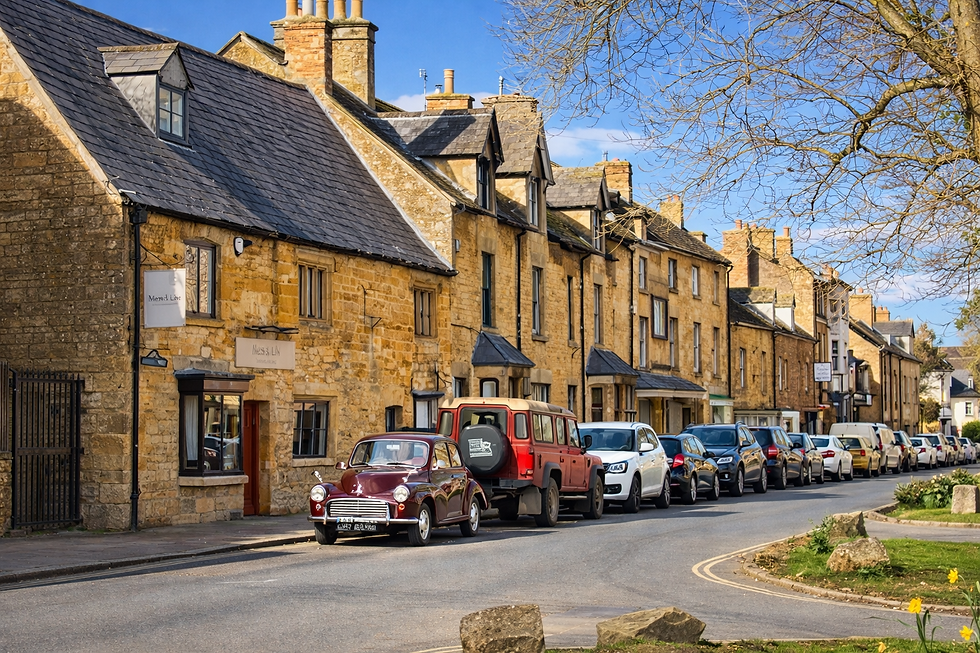
Why Moreton-in-Marsh Feels Different
Moreton is not a tucked-away village. It’s a functional market town, shaped by movement.
Historically:
Roman roads passed through here
Markets were held regularly
Travellers stopped overnight
Today, that legacy explains:
The long, linear High Street
The busy main road through town
The strong choice of food, cafés, and shops
It’s less about postcard scenery and more about ease and access.
Arriving by Train: Why Moreton Matters
Moreton-in-Marsh is one of the best rail entry points into the Cotswolds.
Direct trains from London Paddington
Easy connections to Oxford and Worcester
Station sits a short walk from the High Street
For visitors without a car, this is a major advantage. Many people base themselves here and explore nearby towns like Stow-on-the-Wold or Chipping Campden by taxi or bus.
If you would like to read more about getting to the Cotswolds from London by train you can read our article How to Travel from London to the Cotswolds by Train.

Food, Pubs, Cafés and Shops: A Strength, Not an Afterthought
One of Moreton’s biggest advantages is choice.
Because it’s a working town rather than a tiny village, you’ll find:
A wide range of cafés and tearooms
Independent shops and everyday essentials
Pubs and casual restaurants spread along the High Street
A popular stop is The Bell Inn, often called the Prancing Pony thanks to its strong Tolkien associations. Whether or not that link matters to you, it’s a good example of how deeply Moreton is woven into travellers’ stories.
You’re rarely stuck with a single option here — if somewhere is busy, there’s usually another place a few doors away.

A Short Historical Detour: Curfew Bell and Charles I
Near the centre of town stands the Curfew Tower, where the bell was historically rung each evening to signal the town’s curfew. It’s an easy detail to miss, but it’s a reminder that Moreton has long been an organised, functioning settlement rather than a decorative one.
Moreton also hosted King Charles I during the Civil War, who is believed to have stayed at the White Hart Royal — one of several historic coaching inns that underline the town’s role as a stopping point.

Parking in Moreton-in-Marsh (Read This Carefully)
Parking is manageable — except on market days.
On market days, the market occupies many of the central parking spaces
This makes parking in the centre much harder than usual
The High Street itself sits on a busy main road, so stopping options are limited
What usually works best:
Avoid arriving mid-morning on market days
Use longer-stay car parks slightly away from the centre
Be prepared to walk a short distance
If you’re arriving by train, you avoid this issue entirely — another reason Moreton works well without a car.
Traffic Reality: The Fosse Way
The Fosse Way still runs straight through Moreton, and traffic can be heavy at peak times.
Expect delays at busy points of the day
Noise is higher than in smaller villages
Crossing the road takes more awareness
This is normal for Moreton and part of why it functions as a hub rather than a quiet retreat.
A Good Base for Exploring Nearby Places
Moreton-in-Marsh sits in a very practical position.
It’s:
Very close to Stow-on-the-Wold
A short drive or taxi from Chipping Campden
A pleasant drive up Bourton-on-the-Hill if heading out
Nearby attractions include:
Batsford Arboretum
Sezincote House
Bourton House Garden
This makes Moreton a good base for gardens, countryside, and market towns rather than just village hopping.

Camping and Caravans
For caravan and campervan travellers, Moreton has a campsite within walking distance of the town centre. This is relatively unusual in the Cotswolds and makes it a practical stop if you want access to shops, food, and the railway without driving daily.
Best Time of Day to Visit
Morning: easier parking, calmer feel
Midday: busiest, especially on market days
Late afternoon: relaxed, good for food and browsing
Who Moreton-in-Marsh Suits Best
Moreton works well if:
You’re arriving by train
You want a practical base with food and shops
You’re exploring the north Cotswolds
You value convenience over village prettiness
If you want quiet lanes and scenery outside your door, a smaller village may suit you better.
Mistakes to Avoid in Moreton-in-Marsh
Expecting a traffic-free village feel
Driving in without checking market days
Parking in the centre at peak times
Using it only as a pass-through without stopping
Most frustration comes from expectation mismatch, not from the town itself.
FAQs About Moreton-in-Marsh
What does Moreton-in-Marsh mean?
Moreton comes from an old term meaning a settlement on marshy ground. “In-Marsh” was added to distinguish it from other places called Moreton.
Is Moreton-in-Marsh a good place to stay in the Cotswolds?
Yes. Its railway station, food choice, and location make it one of the most practical bases, especially without a car.
Is parking difficult in Moreton-in-Marsh?
Parking is usually manageable, but on market days many central spaces are taken by stalls, which makes parking much harder.
Is Moreton-in-Marsh busy?
Yes. It sits on a main road and handles through-traffic, especially at peak times.
How long do you need in Moreton-in-Marsh?
A couple of hours is enough to explore the town itself, but many people stay longer because it works well as a base.