
Castle Combe: A Practical Local Guide to the Cotswolds’ Most Photographed Village

Castle Combe is regularly described as the prettiest village in England — a title it shares with Bibury. By the end of this guide, you’ll understand why Castle Combe looks the way it does, how it really compares with Bibury, how busy it gets, where to park without frustration, and when it makes sense to fit it into a wider Cotswolds or Bath itinerary.
Overview: What Castle Combe Is Really Like as a Cotswolds Village
Castle Combe sits in a narrow valley in the southern Cotswolds, close to the Wiltshire border. It’s small, enclosed, and visually cohesive, with a single main street running downhill towards the Bybrook River.
Unlike larger towns, Castle Combe isn’t a place to roam for hours. It’s a high-impact, short-visit village, where atmosphere and appearance matter more than scale or variety. If you’re deciding which Cotswolds villages to include, this overview of Towns & Villages of the Cotswolds helps show how Castle Combe compares with other headline stops.

Why Castle Combe Looks So Perfect
Castle Combe’s appearance is largely the result of economic decline rather than prosperity. The village lost importance early, which meant it avoided later redevelopment.
As a result:
medieval stone cottages remain intact
there’s very little modern intrusion
the village feels unusually consistent and complete
This is why Castle Combe photographs so well — and why it’s often described as timeless rather than charming.
Castle Combe vs Bibury: Two “Prettiest Village” Rivals
Castle Combe and Bibury are frequently compared, and both are regularly labelled the prettiest village in England.
The difference lies in how they’re experienced:
Castle Combe feels enclosed, dramatic, and cinematic
Bibury feels softer, more open, and centred around Arlington Row
Castle Combe suits visitors who want strong visuals and a sense of stepping into a preserved scene. Bibury tends to feel more walkable and slightly more forgiving if it’s busy.
If you’re choosing between them, this practical guide to Bibury explains how the experience differs.
You can also read about them both in our article The Most Picturesque Villages in the Cotswolds.
The Market Cross and the Heart of the Village
At the centre of Castle Combe is the market cross, which anchors most photographs of the village.
This area becomes crowded quickly, especially from late morning onwards. Castle Combe works best when you walk slowly beyond the cross, take in the cottages and river, and avoid treating it as a single photo stop.

St Andrew’s Church (A Useful Escape)
Just uphill from the main street is St Andrew’s Church, which many visitors miss entirely.
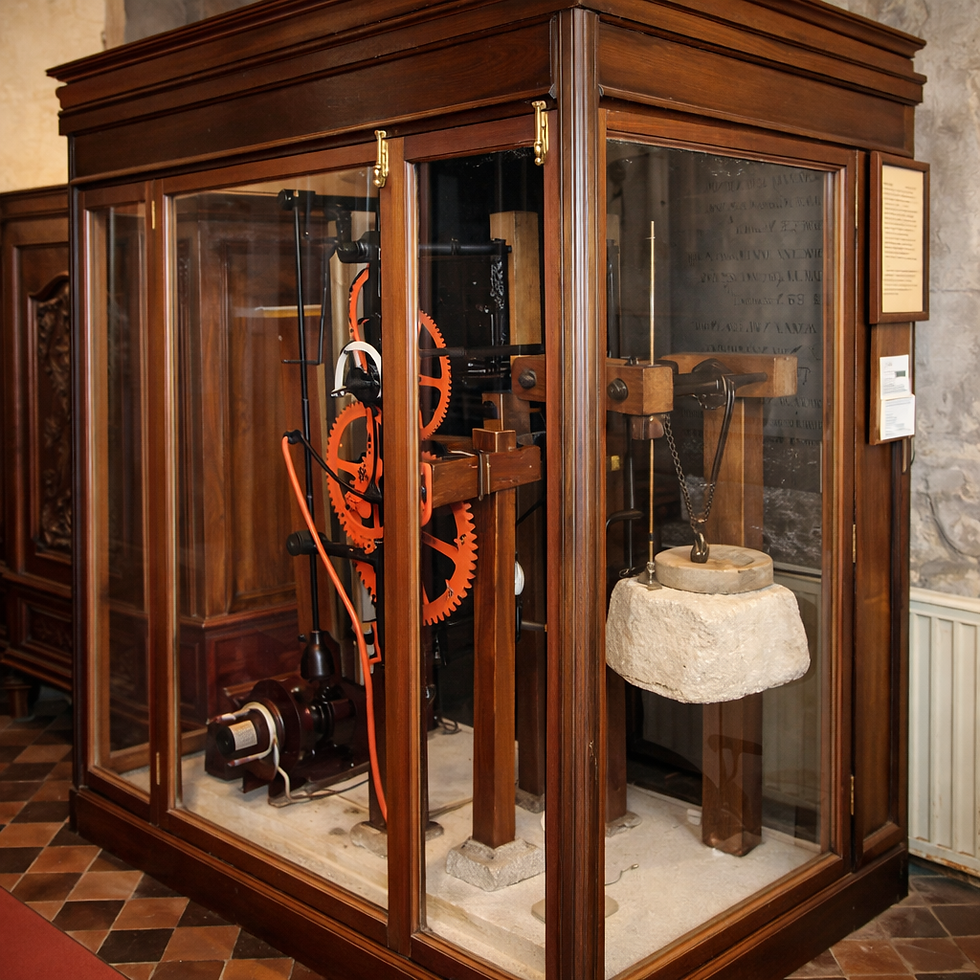
Inside is a working mechanical clock dating back around 500 years, still operating without a face or hands. It wasn’t designed to be decorative or viewed indoors — it was built to drive the church bell, so people working in the surrounding fields could hear the time and structure their day. It’s a practical reminder that Castle Combe was once a working village, not a museum piece.
When the village below feels busy, the church offers space and perspective — a rare commodity in Castle Combe at peak times.

Tip: If you happen to be in Castle Combe on the hour, I highly recommend watching the clock mechanism during the ringing of the hour.
How Busy Castle Combe Really Gets
Castle Combe attracts heavy visitor numbers, particularly between late morning and mid-afternoon.
Because the village is small:
crowds concentrate quickly
narrow streets feel congested
the atmosphere changes sharply depending on timing
This is one of the clearest examples in the Cotswolds where timing matters more than duration.
Food, Pubs and Expectations
Food options are limited and visitor-focused. There are pubs and small cafés, but Castle Combe is not a food destination.
Most people enjoy Castle Combe more when they:
visit briefly
eat elsewhere
avoid planning a long lunch in the village
Treat food as a supporting option, not a reason to stay.
How Castle Combe Fits Into a Wider Trip
Castle Combe is very easy to slot into existing plans.
It works particularly well if:
you’re staying in the southern Cotswolds
you’re travelling from the north Cotswolds towards Bath
you want a short scenic stop rather than a full destination
Because of its location, Castle Combe pairs naturally with a day trip to Bath, or as a contrast to larger towns earlier in the day.
Parking in Castle Combe (Important)
Parking catches many visitors out.
What to know:
there is a large car park at the top of the hill above the village
the walk down is long and steep
there is some roadside parking on the approach road into the village
very few spaces exist within the village itself, and restrictions are enforced
Arriving early gives you more flexibility and a calmer experience.
Best Time of Day to Visit Castle Combe
Early morning: quiet, best for photos
Midday: busiest and most congested
Late afternoon: calmer again, with softer light
If you can only visit once, aim for early or late.
Who Castle Combe Suits Best
Castle Combe is ideal if:
photography is a priority
you want a short, memorable stop
you’re combining it with Bath or a longer drive
If you want shops, cafés, or a longer wander, larger towns will feel more comfortable.
Mistakes to Avoid in Castle Combe
Visiting only at peak midday
Expecting a long village walk
Treating it as a food destination
Driving into the village hoping to park
Most people enjoy Castle Combe more when they time it carefully and keep expectations realistic.
FAQs About Castle Combe
Why is Castle Combe so famous?
Castle Combe is famous for its exceptionally well-preserved medieval buildings and its frequent appearance in photography and film.
Is Castle Combe really the prettiest village in England?
It’s often described that way, alongside Bibury. Which feels “prettier” tends to come down to personal taste and timing.
How long should you spend in Castle Combe?
Around 30–60 minutes is enough for most visitors.
Is Castle Combe very busy?
Yes, particularly between late morning and mid-afternoon in spring and summer.
Is parking difficult in Castle Combe?
Parking is limited near the village. Using the large car park above the village or roadside parking on approach roads is usually easiest.